Baltic maritime heritage
The History of Baltic Sea Ferry Transportation
Connecting Europe Across the Baltic Sea
Discover how maritime trade, passenger transportation and technological innovation shaped ferry routes between Germany, Finland, Sweden and Poland.
Chapter one
The Baltic Sea as a transport corridor
The Baltic is a young, shallow and almost enclosed sea. It stretches more than 1,500 kilometres from the Danish straits to the Gulf of Bothnia and the Gulf of Finland, and its only natural link to the ocean runs through the narrow waters around Denmark. Nine countries share its shores. For the people living around it, the sea has always been less a barrier than a road.
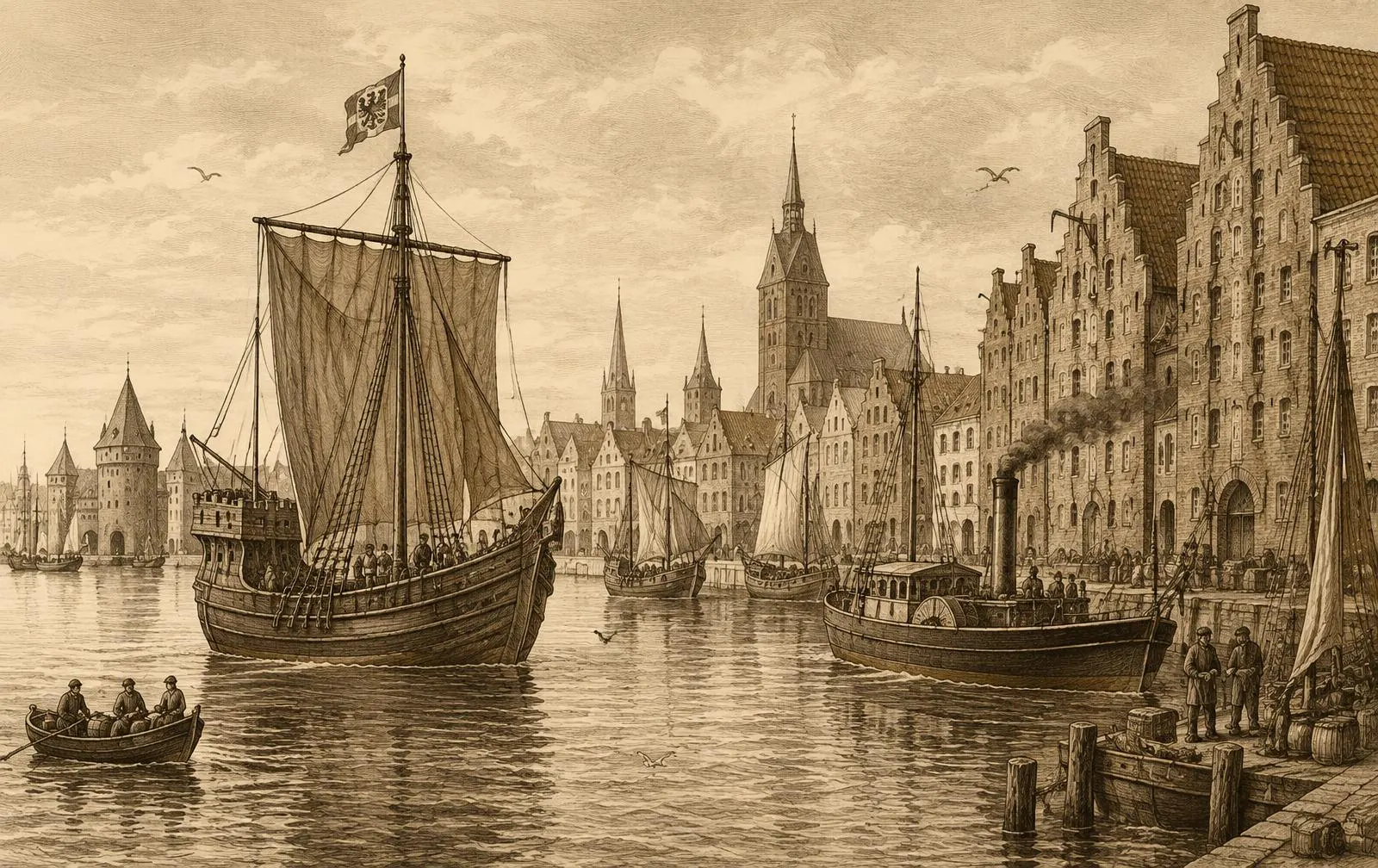
That road carried goods first. In the Middle Ages the Hanseatic League, led by Lübeck, bound together dozens of ports from Bruges to Novgorod. Northern timber, tar, iron and fish travelled south and west; salt, cloth, wine and grain travelled north and east. Ports like Lübeck, Gdańsk, Riga, Stockholm and Turku grew rich on this exchange, and many of them are still ferry harbours today.
Passengers followed. Until the nineteenth century travellers simply bought space on cargo ships and waited for a fair wind. Steam power, arriving in the 1830s, made timetables possible, and with timetables came dedicated passenger lines, cabins and the idea of a regular crossing.
Industrialisation deepened the dependence on the sea. Finland's forest industry, Sweden's iron and engineering industries and Germany's manufacturing created heavy, regular flows of freight. Ports invested in quays, rail links and later the ramps and lanes needed for vehicles.
For Finland in particular, ferries became part of national infrastructure. With no convenient land route to Western Europe, the country's trade and much of its international travel has long depended on Baltic sea passenger transportation and freight shipping. For Sweden, Åland, Poland and northern Germany the same ferries knit together road networks that the sea would otherwise divide — making ferry services one of the quiet foundations of European mobility.
Four nations, one sea
Countries connected by ferries
Germany
Lübeck and its outport Travemünde were the heart of the Hanse. Today German Baltic ports such as Travemünde, Kiel, Rostock and Sassnitz are gateways to Scandinavia and Finland.
Finland
Separated from Western Europe by water, Finland built its links to the continent by sea — from steamers to the Helsinki–Travemünde ferries of the 1960s onward.
Sweden
With routes to Finland, Åland, Germany and Poland, Swedish ports from Kapellskär to Malmö and Trelleborg sit at the centre of the Baltic ferry map.
Poland
From Gdańsk's grain trade to modern terminals in Świnoujście and Gdynia, Polish ports link Central Europe with Scandinavia.
Seven eras
Historical ferry timeline
- 12th–17th c.Hanseatic tradeLübeck-led merchant networks shape Baltic ports.
- 1830sSteam-powered shipsTimetabled passenger steamers appear on the Baltic.
- 1909Railway ferriesSassnitz–Trelleborg carries trains between Germany and Sweden.
- 1950s–60sAutomobile ferriesCar ferries spread across Nordic routes; Germany–Finland service from 1966.
- 1970s–80sRoll-on/roll-offRo-ro and ro-pax ships transform freight and passenger traffic.
- 1990s–2020sModern overnight ferriesLarge ro-pax and cruise ferries; low-emission ship designs.
- 2000sDigital bookingOnline booking and later mobile check-in replace ticket offices.
Historic & modern corridors
Important Baltic ferry connections
Route histories only — not timetables. For current sailings, use the official operator.
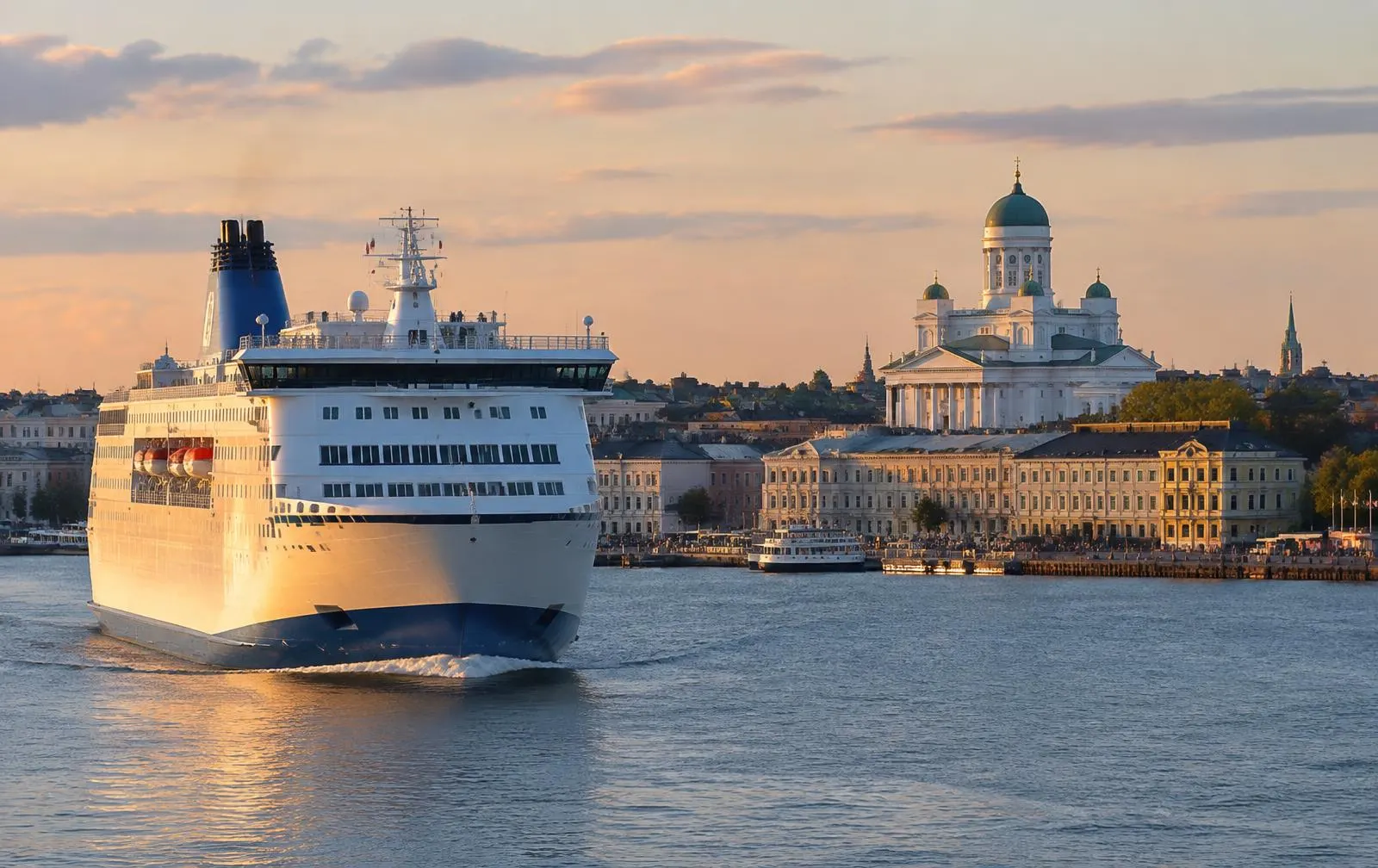
Travemünde ↔ Helsinki
A long-distance overnight link since 1966, shaped by Finnish trade with Central Europe.
Read the history →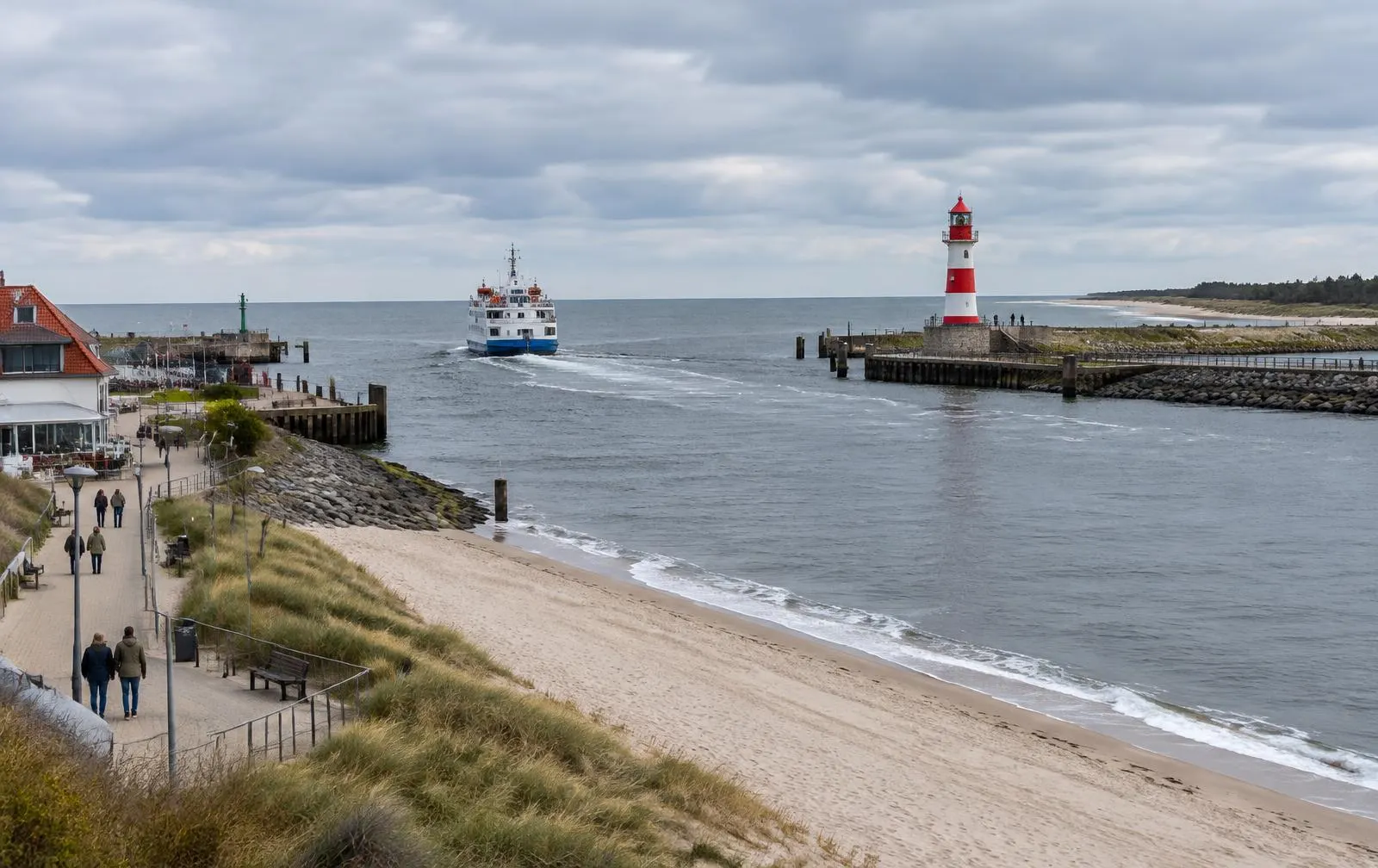
Travemünde ↔ Malmö
A freight-led ro-pax crossing in one of Europe's oldest trade relationships.
Read the history →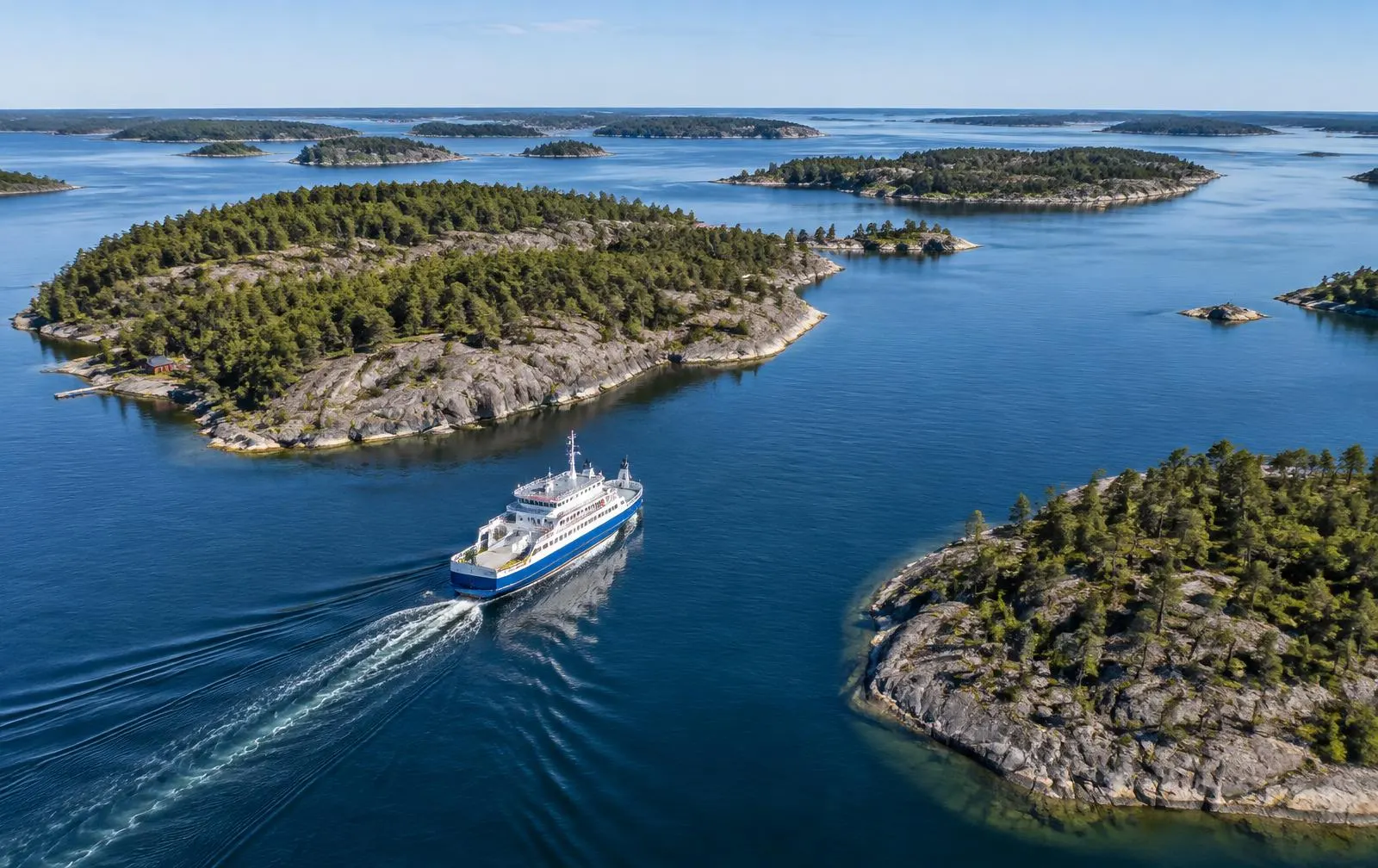
Naantali ↔ Kapellskär
Archipelago sailing via Långnäs on Åland, a route of islands and history.
Read the history →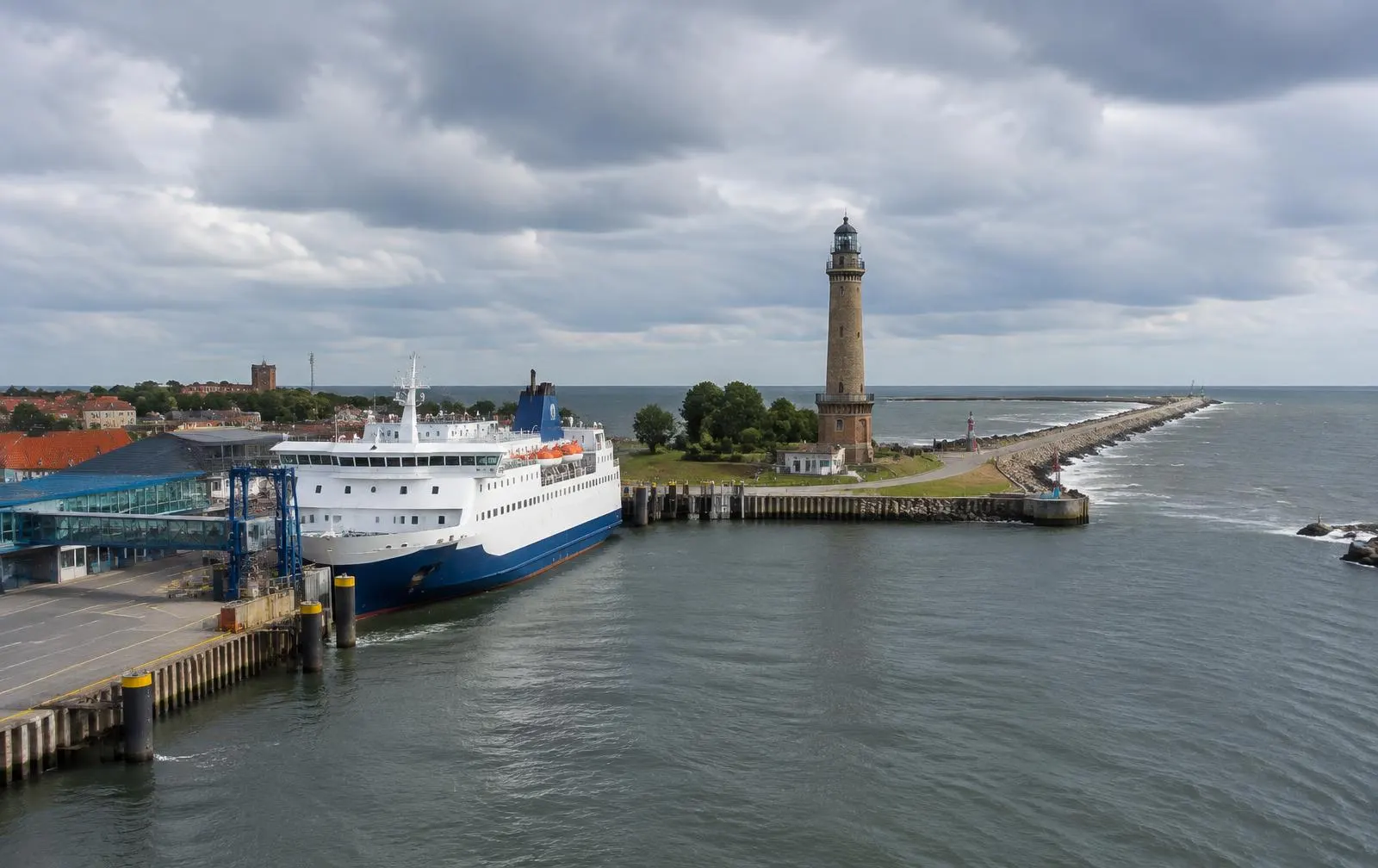
Sweden ↔ Poland
Southern Baltic links to Świnoujście, Gdynia and Gdańsk — and what route searches really mean.
Read the history →Questions
Frequently asked questions
Why did Baltic Sea ferries become important?
The Baltic is almost enclosed, and Finland and Sweden are separated from continental Europe by water. Ferries offered the shortest, most reliable link for trade and travel, first by steam and later by roll-on/roll-off ships.
How did Germany and Finland develop ferry connections?
Steamship links existed from the nineteenth century, but the modern connection began in 1966 when Finnlines opened a passenger and car service between Helsinki and Travemünde.
What is the history of the Travemünde–Helsinki ferry?
It grew from 1960s car ferries to the fast Finnjet of 1977 and later large ro-pax ships. Read the full history.
Why are overnight ferries used in the Baltic Sea?
Many crossings are too long to complete in a day. Ships therefore offer cabins, so passengers and lorry drivers can rest on board.
How did Sweden and Finland develop ferry connections?
They were one realm until 1809. Steamships linked Stockholm and Turku from the 1830s, and car-ferry companies formed in the late 1950s.
What role do the Åland Islands play?
Åland lies between Sweden and Finland. It is a natural stopping point, has its own ports at Mariehamn and Långnäs, and has a special tax status within the EU.
How have car ferries changed European travel?
They allowed families and hauliers to take vehicles across the sea, linking the road networks of the Nordic countries with continental Europe.