Baltic sea ferry history
The Baltic Sea is a shallow, almost enclosed inland sea of roughly 377,000 square kilometres, bordered by nine states and reached from the world ocean only through the narrow Danish straits. Its long coastline, numerous islands and seasonal ice have shaped how people and goods move across it for more than a thousand years. This article traces the history of Baltic ferry routes, from medieval merchant cogs to the large roll-on/roll-off passenger vessels that cross it today.
Early maritime trade
Long before the word "ferry" was used, the Baltic was a corridor of exchange. Viking-age traders moved furs, amber, iron and silver between Scandinavia, the eastern Baltic and the river routes into Russia. Trading places such as Birka in Sweden and Hedeby near today's Schleswig flourished between the eighth and eleventh centuries. These voyages were seasonal and irregular: ships sailed in summer, hugged the coasts and wintered ashore.
The underlying pattern, however, was already visible. The northern lands produced timber, tar, fish, metals and furs; the south and west produced grain, salt, cloth and manufactured goods. Any route that shortened the distance between them had commercial value — a logic that still underlies Baltic sea maritime transport.
The Hanseatic League
From the twelfth century onward, German merchant communities organised the trade more systematically. Lübeck, founded in 1143 and refounded in 1159, became the leading city of what grew into the Hanseatic League — a loose association of trading towns rather than a state. Hanseatic merchants maintained offices (Kontore) in Bergen, Bruges, London and Novgorod, and towns such as Visby, Danzig (Gdańsk), Riga, Reval (Tallinn) and Stockholm were bound into the same commercial world.
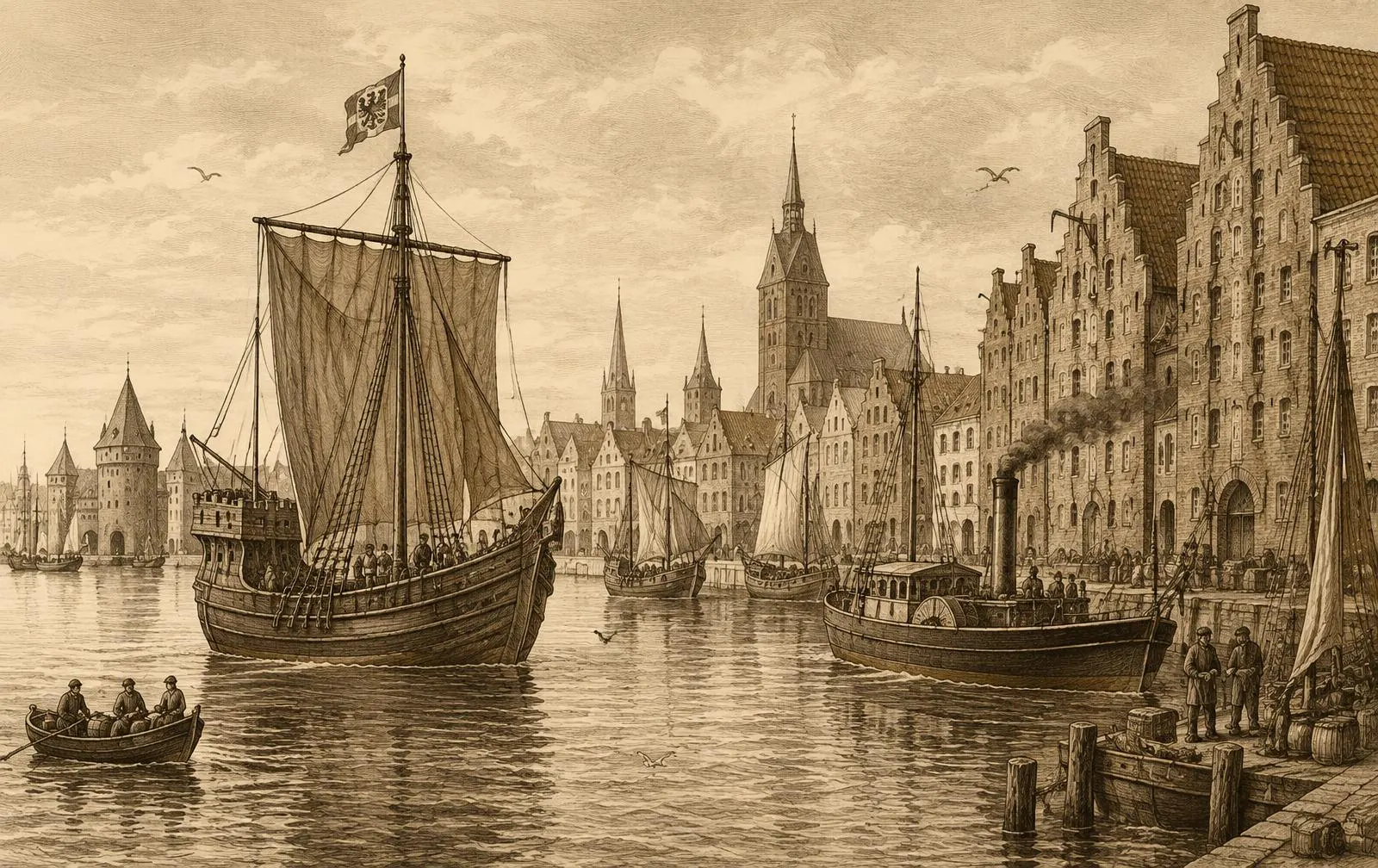
The Hanseatic cog, a broad, flat-bottomed sailing ship, carried bulk cargo along predictable routes. Ports developed warehouses, quays and legal customs for foreign traders. The League's influence declined from the late fifteenth century as territorial states grew stronger, and the last general Hansetag met in 1669. Its legacy was a network of Baltic ports, many of which — Lübeck and its outport Travemünde among them — remain ferry harbours today.
The age of sailing ships
From the sixteenth to the nineteenth century the Baltic was a strategic sea contested by Denmark, Sweden, Poland-Lithuania, Prussia and Russia. Sweden's control of Finland until 1809 meant that crossings of the Gulf of Bothnia and the Åland Sea were internal journeys within one realm. Postal routes, such as the historic mail route across the Åland Sea between Grisslehamn and Eckerö, carried letters and officials across open water in small boats — sometimes over ice in winter.
Passenger travel in this period was incidental to cargo. Travellers booked space on merchant vessels, and departures depended entirely on wind and weather. A crossing that might take a day in fair conditions could take a week in foul ones.
The Industrial Revolution
Steam propulsion changed the Baltic in the first half of the nineteenth century. Steamships could keep a timetable irrespective of wind, which made regular passenger services possible for the first time. During the 1830s steamers began linking Stockholm with Turku and other ports, and steamship lines soon connected Lübeck, Stettin (Szczecin), Copenhagen, Helsinki and St Petersburg.
Railways reinforced the trend. As rail lines reached the coast, ports became interchanges between land and sea, and shipping companies began to advertise through journeys. Industrialisation in Finland and Sweden — particularly timber, pulp and paper — created large, regular export flows towards continental Europe.
The development of passenger ferries
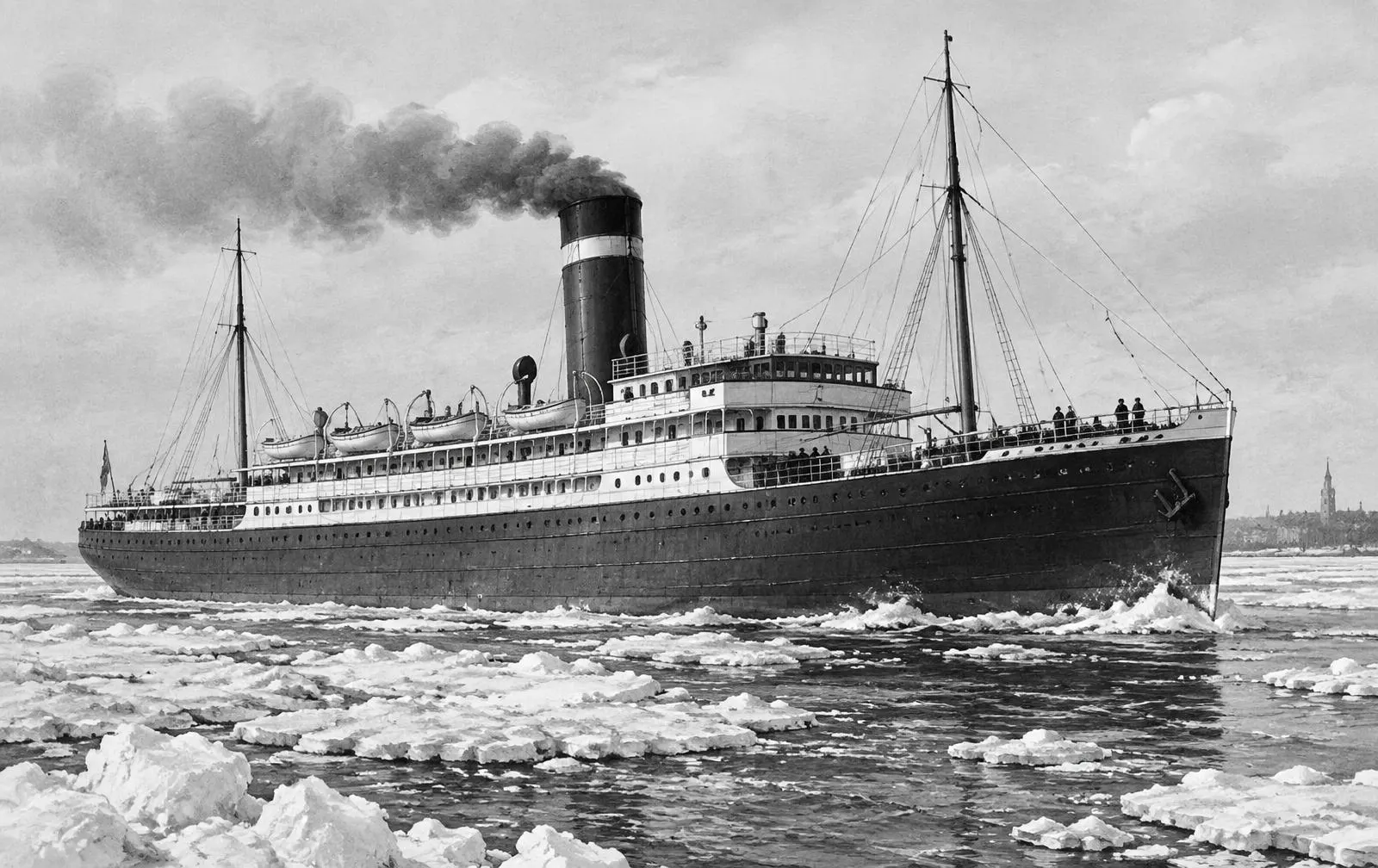
By the late nineteenth and early twentieth century, dedicated passenger shipping companies operated scheduled Baltic routes. In Finland, companies such as Finska Ångfartygs Aktiebolaget (FÅA, founded 1883) and Bore (founded 1898) ran services to Stockholm and continental ports. These ships offered cabins, saloons and dining rooms, and many were strengthened for ice so that winter service could continue.
The two world wars repeatedly interrupted these services. After 1945, the political division of Europe changed the map: the southern and eastern Baltic coast lay behind the Iron Curtain, while connections between the Nordic countries and West Germany became especially important.
Railway ferries
Railway ferries carried entire trains or wagons on rails laid across the ship's deck. In 1909 the Sassnitz–Trelleborg train ferry opened between Germany and Sweden, allowing passenger carriages and freight wagons to travel without unloading. Rail ferries also crossed the Danish straits. They were a direct ancestor of the later vehicle ferry: the idea that the cargo should roll on and roll off rather than be lifted.
The rise of automobile transportation
Mass car ownership in post-war Western Europe created new demand. In the 1950s and especially the 1960s, purpose-built car ferries with bow and stern doors appeared on Nordic routes. Companies that would later be known as Silja Line (from 1957) and Viking Line (from 1959) were formed to carry cars and passengers between Finland, Åland and Sweden. Motorists could now drive from Finland to continental Europe on a single journey, which became a staple of the history of car ferries in the region.
Roll-on/roll-off technology
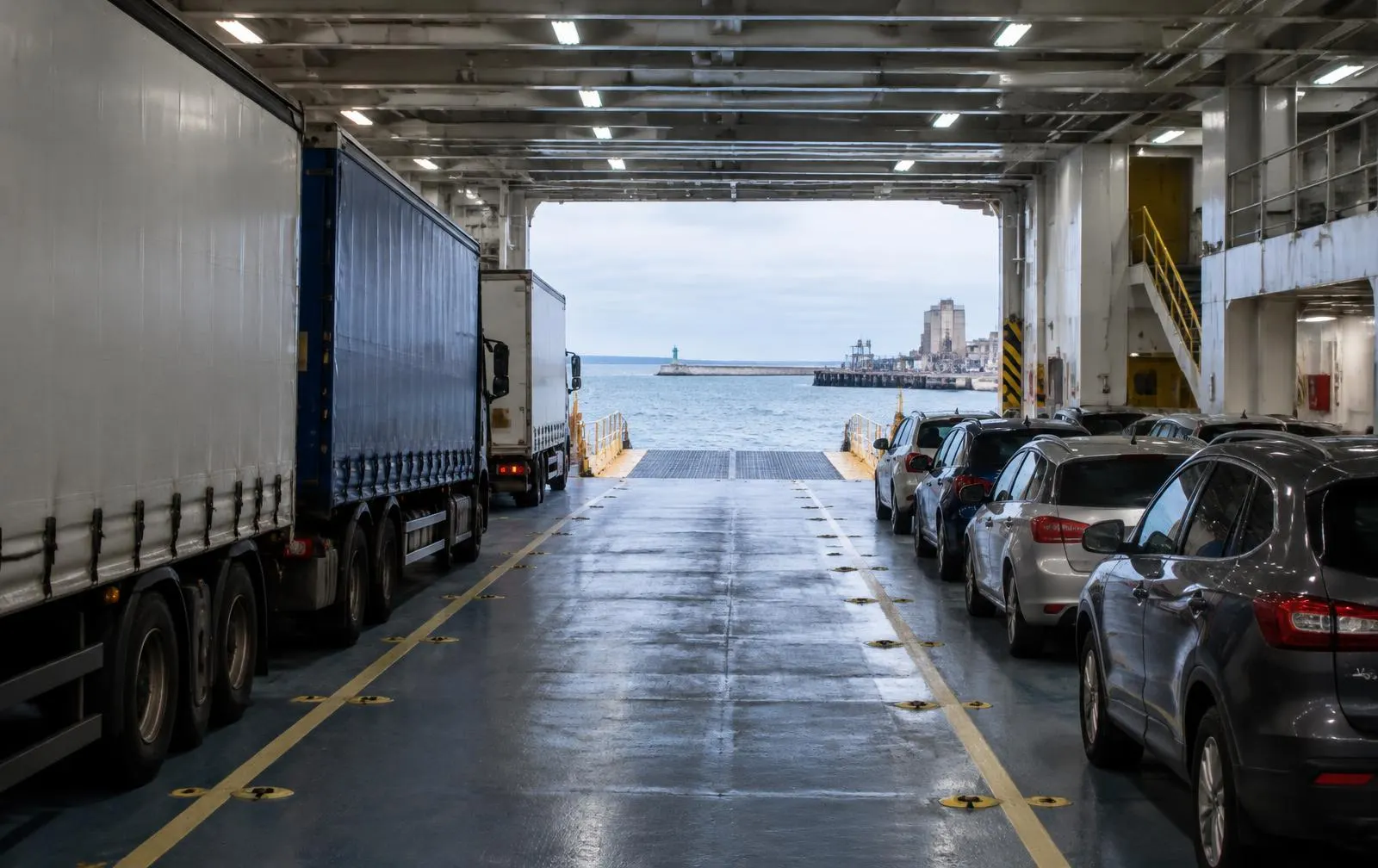
Roll-on/roll-off (ro-ro) design meant that lorries, trailers and cars could drive directly onto internal vehicle decks via ramps. Loading times fell from days to hours. Combined ro-pax ships carried both freight vehicles and passengers, giving operators two income streams on the same sailing. For Finland — which has no land border with Western Europe other than via Sweden's far north — ro-ro shipping became a key part of its foreign trade logistics. See our article on overnight ferries and modern ro-ro travel for more on roll on roll off ferry history.
The development of Finnlines
Finnlines was founded in Helsinki in 1947 as a cargo shipping company to serve Finland's post-war foreign trade, with ships carrying forest products to Western Europe and beyond. In 1966 the company's Finnhansa and Finnpartner opened a passenger and car service between Helsinki and Travemünde, establishing what is often described as the classic Germany–Finland ferry link. In 1977 the gas-turbine Finnjet entered the same route and became one of the best-known passenger ferries of its era.
Over later decades Finnlines concentrated on ro-pax and freight shipping. In the 2000s the Italian Grimaldi Group became its majority owner, and the company later became fully owned by Grimaldi. Its passenger routes have included Helsinki–Travemünde, Malmö–Travemünde and Naantali–Långnäs–Kapellskär. This summary is offered for historical context only — Finnlinec is an independent publication and is not connected to the company. For the full history of Finnlines as told by the company itself, consult its official website.
Modern Baltic Sea ferry networks
Today's network includes short-sea crossings of a few hours, overnight routes of up to around 30 hours, and dedicated freight lines. Ferries remain essential for Finland's and Sweden's trade with continental Europe, for Åland's connections to both countries, and for traffic between Scandinavia and Poland. Environmental regulation — notably the Baltic Sea Emission Control Area, with a 0.10% fuel sulphur limit from 2015 and nitrogen-oxide controls for new ships from 2021 — is reshaping vessel design. Read on for the individual routes:
Why this history matters
Studying Baltic passenger ferry history shows how a regional sea became one of the most intensive ferry areas in the world. Alongside the English Channel and the Adriatic, the Baltic offers some of the richest historical ferry routes in Europe, many still in use on the same port pairs that steamers served more than a century ago.
Historical timeline
- 1143Lübeck foundedCount Adolf II of Holstein founds Lübeck; refounded under Henry the Lion in 1159, it becomes the leading Hanseatic city.
- 1356First general HansetagThe first general diet of Hanseatic towns meets in Lübeck, formalising the League's role in Baltic trade.
- 1669Last HansetagThe final general assembly of the Hanseatic League is held, as Baltic commerce shifts to territorial states.
- 1830sSteam reaches the northern BalticRegular steamship services begin linking Stockholm with Turku and other Baltic ports.
- 1909Sassnitz–Trelleborg train ferryThe 'Königslinie' rail ferry opens between Germany and Sweden, carrying railway carriages across the Baltic.
- 1947Finnlines foundedFinnlines is established in Helsinki as a cargo shipping company serving Finnish foreign trade.
- 1960sCar ferries spreadPurpose-built car ferries with bow and stern doors become standard on Nordic routes.
- 1966Germany–Finland passenger serviceFinnlines' Finnhansa and Finnpartner open passenger and car service between Helsinki and Travemünde.
- 1977FinnjetThe gas-turbine-powered Finnjet enters Helsinki–Travemünde service, among the fastest passenger ferries of its era.
- 2015Baltic sulphur limitA 0.10% fuel sulphur limit takes effect in the Baltic Sea Emission Control Area.
- 2023–24New Sweden–Finland vesselsFinnsirius and Finncanopus enter service on the Naantali–Långnäs–Kapellskär route.