
The southern Baltic separates Sweden from Poland by little more than a day's sail. Yet the history of Sweden–Poland maritime connections has been shaped as much by politics as by geography — from royal unions and wars to the Iron Curtain and EU enlargement.
Historical trade between Sweden and Poland
Grain from Poland's fertile hinterland reached the Baltic through Gdańsk (Danzig), the great Vistula port, in the early modern period; Sweden supplied iron and copper. Political ties were close and often contentious: Sigismund III Vasa was elected King of Poland in 1587 and briefly also ruled Sweden, and the two countries later fought a series of wars over control of the Baltic coast, including the Swedish invasion of 1655 known in Poland as "the Deluge".
The development of Baltic ports
The southern Baltic coast has fewer natural deep harbours than the rocky north. Ports grew at river mouths — the Oder, the Vistula — and required dredging, breakwaters and canals. Szczecin, on the Oder, was historically the main port of Pomerania, with Świnoujście at the sea entrance serving as its outport.
Swedish maritime transportation
Southern Swedish ports such as Ystad, Trelleborg, Karlskrona and Malmö face directly toward Germany and Poland. Ystad and Trelleborg developed as ferry ports with rail and road connections; Karlskrona, a naval base founded in 1680, later gained a passenger and freight link to Gdynia.
Świnoujście as a Polish ferry port
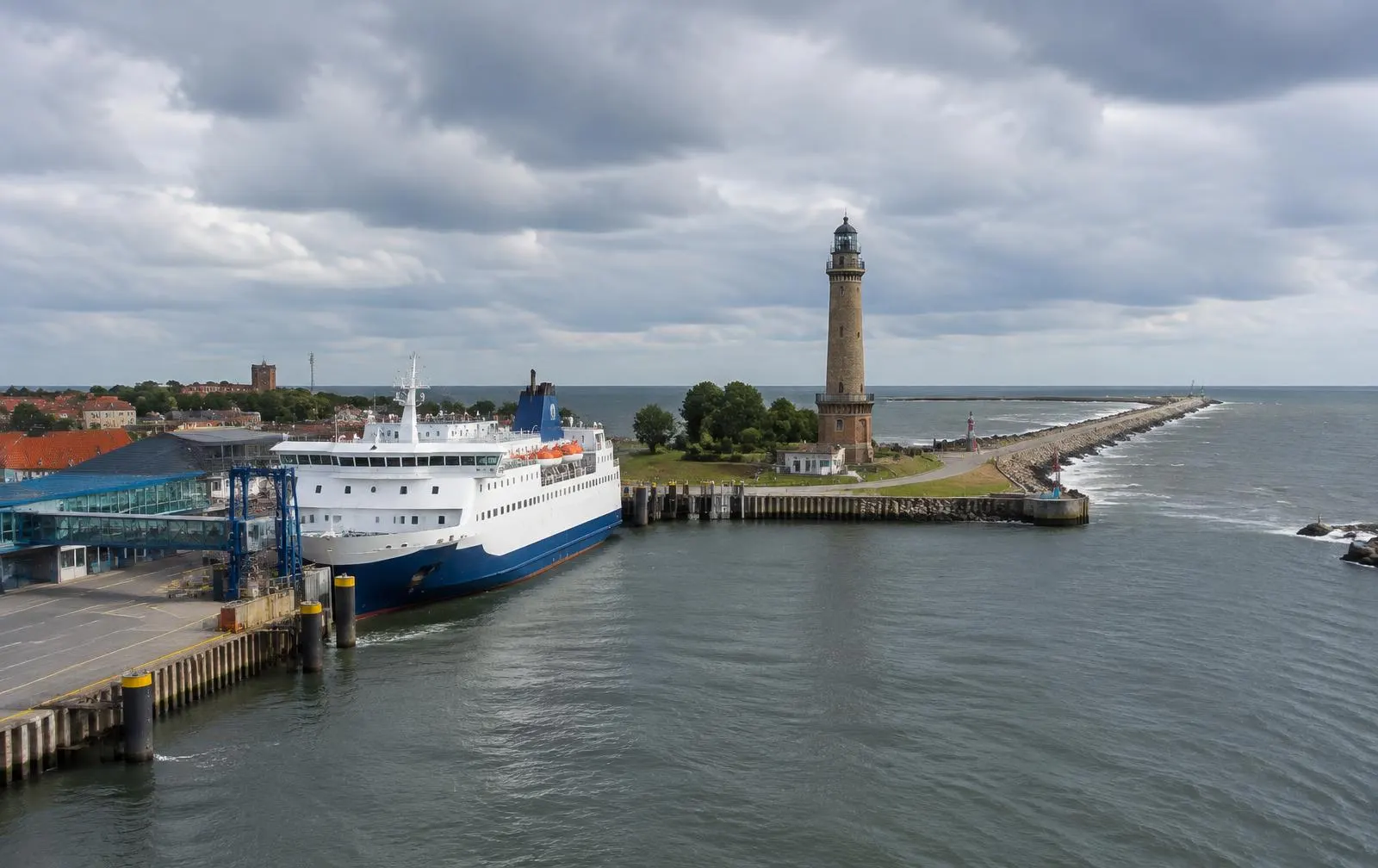
Świnoujście lies on the islands of Usedom and Wolin at the mouth of the Świna, the channel connecting the Szczecin Lagoon with the Baltic. It became Polish in 1945. Its ferry terminal developed as the main Polish gateway for routes to Ystad and Trelleborg, with road links south toward Szczecin and Berlin. The port's tall nineteenth-century lighthouse is one of the tallest on the Baltic coast.
The expansion of passenger ferry services
Polferries, the ferry brand of the Polish Baltic Shipping Company, was founded in 1976 and operated passenger services to Sweden and Denmark during the communist period. After 1989, as Poland opened its economy, new operators entered the market — Unity Line began in 1994 — and ro-pax capacity increased substantially. Stena Line has operated the Gdynia–Karlskrona route, and TT-Line has served Świnoujście–Trelleborg.
The growth of automobile transportation
Poland's accession to the European Union in 2004 brought rapid growth in road freight between Poland and Scandinavia. Vehicle ferries became the main link for Polish hauliers carrying goods to Sweden and Norway, and for workers and tourists travelling by car. A car ferry between Sweden and Poland today typically carries a mix of lorries, vans and private cars.
Modern Sweden–Poland ferry routes
Corridors with an established history include Ystad–Świnoujście, Trelleborg–Świnoujście, Karlskrona–Gdynia and Nynäshamn–Gdańsk. Each has been served by different operators over time. For travellers searching for a ferry from Sweden to Poland or Poland to Sweden, the current operator and timetable must be confirmed directly with the company.
| Corridor | Operators historically associated |
|---|---|
| Ystad–Świnoujście | Polferries, Unity Line |
| Trelleborg–Świnoujście | TT-Line, Unity Line |
| Karlskrona–Gdynia | Stena Line |
| Nynäshamn–Gdańsk | Polferries |
Common searches include Poland Sweden ferry, ferry Sweden Poland, ferry Poland Sweden and car ferry Sweden Poland; all of these correspond to the corridors listed above rather than to one single route.
Malmö–Świnoujście search and route information
Finnlines has at times listed sailings between Malmö and Świnoujście in its own route information, largely oriented toward freight. Finnlinec cannot verify current availability, passenger acceptance or timetables, and we do not present this as an operating service. Before travelling, confirm on the official Finnlines website whether the port pair is offered, and compare alternatives such as Ystad–Świnoujście or Trelleborg–Świnoujście, which are more widely documented for passenger travel. Travellers from Malmö can reach Ystad or Trelleborg by road or rail.
The future of Baltic Sea transportation
Southern Baltic ferries are subject to the same environmental pressures as the rest of the sea: the Baltic Sea Emission Control Area's low-sulphur rules from 2015, nitrogen-oxide limits for new ships from 2021, and the inclusion of shipping in the EU Emissions Trading System from 2024. Operators have invested in exhaust scrubbers, LNG propulsion and shore-power connections. Which technologies dominate in the long term remains uncertain.
Historical timeline
- 1587Vasa dynasty in PolandSigismund Vasa, heir to Sweden, is elected King of Poland, linking the two crowns for a time.
- 1945Świnoujście becomes PolishAfter the Second World War, Świnoujście and Szczecin become part of Poland.
- 1976Polferries foundedThe Polish Baltic Shipping Company's ferry brand begins operating passenger routes to Scandinavia.
- 1990sNew operatorsAfter 1989, new companies including Unity Line (1994) expand Sweden–Poland ro-pax services.
- 2004Poland joins the EUEU membership boosts freight traffic across the southern Baltic.
- 2015Emission Control AreaLow-sulphur fuel rules take effect for Baltic shipping.